Physicians writing on KevinMD about the life of the profession: the work itself, the exhaustion, what women physicians are paid and asked to carry, the losses the profession has been slow to name, and who decides how physicians work. Five maintained records draw on this archive: Physician burnout: what physicians say, in their own words, Primary care: what physicians say, in their own words, Women in medicine: what women physicians say, in their own words,, Physician suicide: what physicians say, in their own words, and Physicians and administrators: what physicians say about who runs medicine, in their own words.
Paraphimosis is a urological emergency characterized by the inability to reduce a retracted foreskin over the glans penis, leading to vascular congestion, edema, and potential tissue necrosis. While paraphimosis can result from local trauma, poor hygiene, or iatrogenic causes, it is increasingly recognized as a clinical manifestation associated with underlying systemic disease, particularly diabetes mellitus.
Diabetes mellitus, especially when undiagnosed or poorly controlled, exerts profound effects on local tissue immunity, wound …
Read more…
Paraphimosis and diabetes: the hidden link
Not long ago, a friend told me, “I switched insurance and can’t find a doctor who will take me.” Another said, “I left a leading integrated health plan after going on Medicare and now no one will see me.” These aren’t isolated complaints. They’ve become the new reality in an affluent U.S. region: It’s easier to buy a multimillion-dollar home than to find a new primary care doctor.
I saw this …
Read more…
Silicon Valley’s primary care doctor shortage
Picture this: It’s your second month of residency, and you’re deep into a hectic ED shift. The pressure is on; you’re managing patients, making decisions, and trying to get better. Then, a mistake happens. Not one that results in significant harm to the patient, but maybe you miss a diagnosis, fumble a procedure, or are just overwhelmed in general. You know failure is part of growth, but that doesn’t make …
Read more…
A doctor’s cure for imposter syndrome
As an internal medicine physician practicing in Southaven for more than eight years, I’ve learned one simple truth: Prevention is often more powerful than treatment. Every week, I see patients who wish they had come in sooner, before diabetes, hypertension, or heart disease quietly took hold. These conditions rarely appear overnight; they build over years of small imbalances in diet, stress, and lifestyle. The encouraging news is that small, steady …
Read more…
Small habits, big impact on health
Florida has seen over 1,300 pertussis cases this year, an 81 percent increase from 2024. I didn’t speak as a retired pediatrician. I spoke as a witness: a witness to systems retreat, a witness to the dismantling of public health, and a witness to the consequences of ignoring coordinated care.
The numbers are staggering. Over 1,500 confirmed measles cases in 2025. Three deaths, the first measles-related fatalities in the U.S. in …
Read more…
The dismantling of public health infrastructure
Every health care organization measures recruitment and retention. HR teams work to offer competitive packages based on salary, benefits, PTO, and CME allowances. These details matter. But for today’s physicians, these are simply the baseline. The physicians entering and shaping today’s workforce expect more. They have new lines of questioning related to the amount of evening and weekend coverage, call schedules, administrative time, and available support staff. Today’s physicians will …
Read more…
What is your physician well-being strategy?
The first day I walked into my residency clinic, I realized this was the part of medicine I understood the least. The waiting room was full, and every patient carried not just a diagnosis but the weight of a system already stretched thin. We learned to triage, to document, and to move quickly. But we did not learn how to lead, how to build continuity, or how to see the …
Read more…
Why are we devaluing primary care?
In examination rooms across the country, the foundations of medical practice are being eroded. Physicians navigating the opioid crisis are forced to choose between our ethical duty to alleviate suffering and the legal risk of sanction. When we provide reproductive care, the patient-physician relationship is being superseded by political ideology, with devastating consequences. When we follow evidence-based guidelines for gender-affirming care, we face legislative intrusion that substitutes political agendas for …
Read more…
Why medicine should be the Fifth Estate
The first thirty years of my life were about becoming a doctor. I grew up in a middle-class family in a safe neighborhood with good schools and steady routines. My parents valued hard work and education, and I learned early that if you studied, followed the rules, and kept your head down, good things would follow. Private Catholic elementary school, public high school, then college and medical school. Every step …
Read more…
The difference between a doctor and a physician
I entered medicine not just to treat illness, but to confront injustice. I wanted to be a force for good, battling death, yes, but also misinformation, institutional neglect, and the quiet superstition that children with developmental disabilities were somehow less worthy of coordinated care. That conviction led me to align my career with the legacy of Eunice Kennedy Shriver, whose advocacy gave rise to the Special Olympics and helped shape …
Read more…
The case for coordinated care for children
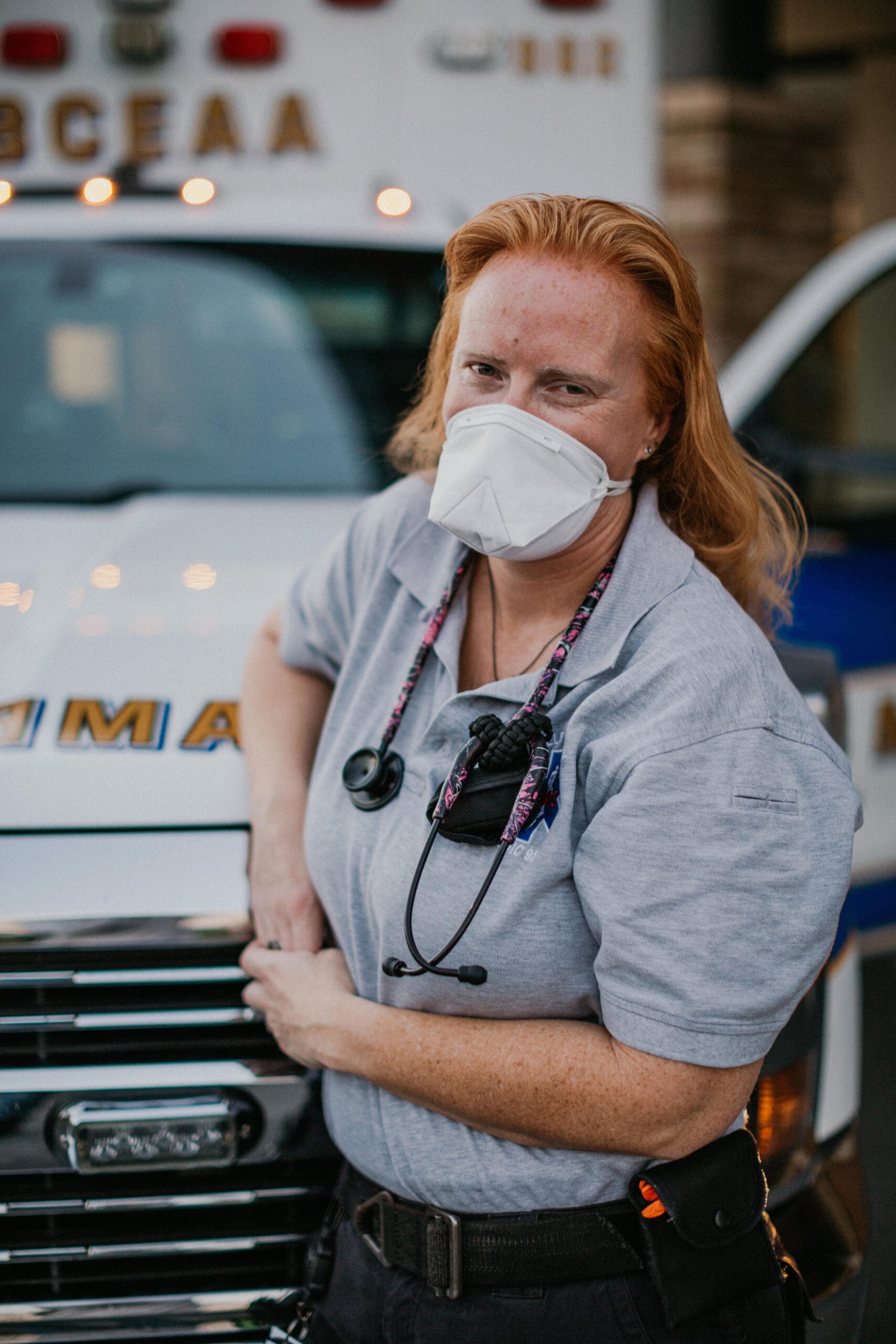
The service entrance doors slid to the right and, as Molly Humphreys and I exited the Berkeley Medical Center, we stepped into an unseasonably warm evening. “It’s the golden hour,” Molly said as we surveyed our surroundings and removed our masks, exposing flat faces with creased noses. Behind us stood a cold, somber hospital and we were engulfed in an empty parking …
Read more…
The unseen labor of EMS professionals
The highway from western North Carolina to northeast Georgia is dark at five in the morning. One of my long-time patients grips the wheel and drives two hours for a 15-minute visit with the doctor she trusts. She could have met me by video from her kitchen, but the law forbids it. The moment she crosses that state line, I lose the right to care for her. That’s not medicine. …
Read more…
Telehealth licensing barriers hurt patients
This morning marked a sad ending to my night shift. It was, or rather, had been, at a small community hospital in a tiny New England town, nestled in the backyards of where I was born and raised. But in just a few days, it will cease to exist as a hospital and morph into a stand-alone ER. Before I wrapped up my final shift, I sat down with a …
Read more…
When a rural hospital dies
In December 2017, a fellowship-trained neuroradiologist in good standing was pulled off his teleradiology shift mid-interpretation by the police, put in handcuffs, and taken to jail. He was accused of reading ultrasound studies too quickly, approximately three to five minutes per interpretation, inconceivable to the district attorney and their hired plaintiff radiologist expert. Because there were Medicaid patients involved, he was said to be defrauding the government. The allegation was …
Read more…
When a good radiologist is accused of fraud
During the pandemic lockdown I felt lonely and cut off from the usual fun and games with friends and family. I spent far too much time inside my own head, reading and thinking, but starving for the simple nourishment of play. When restrictions eased, all I wanted was to wag my tail at other people and invite them to a game of catch. Esoteric intellectual play can be rewarding, but …
Read more…
The simple wellness hack of playing catch
Psychiatrists know what it feels like to practice in a field questioned at every turn. From the earliest days of our specialty, we have faced doubts not only from the public but also from our own colleagues in medicine. The very existence of conditions such as schizophrenia, melancholic depression, bipolar disorder, or attention-deficit disorder has been challenged repeatedly. We have heard the claims: It’s just weakness. It’s a vitamin deficiency. …
Read more…
What psychiatry can teach all doctors
Physicians hold one of the most essential and sacred trusts in every society: the care of human life. Yet across many developed nations, this trust is undermined by a growing culture of suspicion, litigation, sensationalism, and retaliation. When unethical malpractice lawyers hunt for profit, unfair regulators overreach with bureaucratic zeal, unprofessional journalists publish half-truths for headlines, or disgruntled patients weaponize complaints, the damage goes far beyond the doctor’s reputation. The …
Read more…
How undermining physicians harms society
In 1995, I stood at the edge of a map most policymakers ignored: Appalachian Ohio. The Surgeon General’s 2002 report, “Closing the Gap: A National Blueprint to Improve the Health of Persons with Mental Retardation,” would later cite our work as a model for rural specialty outreach. But long before that recognition, we were ledgering care into counties where children with developmental disabilities had no clear path to diagnosis, let …
Read more…
How health disparities affect children
The Federally Qualified Health Center stands as perhaps the most eloquent institutional response to the perennial tension between medicine as market commodity and medicine as moral imperative. In the concrete reality of the FQHC (with its sliding-fee scales, its community governance structures, and its legislative mandate to serve the underserved) we find materialized those aspirations that have animated medical ethics since the Hippocratic tradition: that healing should flow toward need …
Read more…
The FQHC model and medicine’s moral promise
I define a frivolous medical malpractice lawsuit as being caused by a random error of nature.
Plaintiffs are entitled to feel aggrieved and to seek legal counsel. Some, however, have ulterior motives.
Plaintiff attorneys are “good Samaritans.” They work for a contingency fee. This invites ulterior motives; however, because these attorneys bear the cost, motives do not matter. Only the value of a case matters and there is artificial intelligence to weed …
Read more…
Who profits from medical malpractice lawsuits?