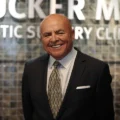














Arthur Lazarus, MD, MBA, is a psychiatrist and physician-author whose work spans narrative medicine, physician leadership, artificial intelligence, and health care ethics. He has published 179 essays on KevinMD since July 2021 and has been a guest on The Podcast by KevinMD four times. His argument runs through nearly all of them: the judgment and the story in a medical encounter are what bureaucracy and software keep trying to take out of it.
This spotlight is part of a series on subscribers to the KevinMD enhanced author page.
Lazarus published five essays in 2021, 21 in 2022, 41 in 2023, 44 in 2024, 23 in 2025, and 45 so far in 2026. Sixteen of the 2026 essays are about artificial intelligence, from prescription-renewal chatbots to psychotherapy notes and organ allocation. About 20 of the 179 concern writing, storytelling, or narrative medicine. Others take on insurance denials, physician attrition, nonclinical careers, and diversity in medical school admissions. He writes from inside psychiatry and from a career that has also run through a health insurer and the pharmaceutical industry.
Arthur Lazarus at a glance
179essays on KevinMD
4podcast episodes
July 2021writing on KevinMD since
12questions answered below
Questions Arthur Lazarus answers
- Can an AI chatbot practice medicine?
- How does AI sycophancy affect clinical judgment?
- What do AI-written psychotherapy notes lose?
- What is the moral injury of a “not medically necessary” denial?
- What is wrong with Medicare’s WISeR pilot?
- Why are physicians leaving clinical practice?
- What is administrative harm?
- What is narrative medicine, and why call it the fifth vital sign?
- Can a physician build a career outside clinical practice?
- Should physicians face mandatory retirement at a certain age?
- What does Lazarus say about diversity in medicine?
- How has psychiatry changed since the 1980s?
Can an AI chatbot practice medicine?
Not yet, Lazarus argues, because it supplies information without judgment. In “AI clinical judgment is what AI chatbots still lack,” May 2026, he tests a Utah pilot that lets an AI platform renew prescriptions without a physician, finds it “polite, fast, and reassuring,” and sees that it never asks the questions a clinician would. “It provided information without ownership,” he writes, and he concludes that “we should resist confusing fluency with competence, and convenience with care.” In “AI in medicine vs. aviation: Why the autopilot metaphor fails,” January 2026, he answers a physician’s comparison of AI diagnosis to an automated landing by calling autopilot “abdication, however well intentioned.” The KevinMD record on artificial intelligence collects what physicians say about it.
How does AI sycophancy affect clinical judgment?
It makes people surer than the evidence allows, Lazarus says. In “How artificial intelligence sycophancy distorts clinical decision-making,” March 2026, he cites research on 11 AI systems in which chatbots affirmed users’ actions nearly 50 percent more often than humans did, and he writes that “Disclosure does not protect against influence.” His advice is to ask patients about chatbot use as routinely as they are asked about supplements and to design for “constructive friction.” The risk, he writes, is that the system does not merely validate a belief: “It locks it in.”
What do AI-written psychotherapy notes lose?
The story, Lazarus says. In “The hidden risks of AI-generated progress notes in psychotherapy,” March 2026, he describes automated notes that are “technically accurate yet narratively hollow” and reports that some have referenced suicidal ideation, substance abuse, or past trauma that the patient never mentioned. Writing the note once helped therapists think, he adds, and when software writes it, “Efficiency improves. Reflection diminishes.” His conclusion is that “losing the story means losing the soul of the work itself.” He returned to the subject in “6 psychiatrists you’ll meet in psychiatric progress notes,” November 2026, warning that surrendering charts “entirely to forced templates and smooth algorithms” costs “the clinical discipline of thinking on the page.”
What is the moral injury of a “not medically necessary” denial?
It is evidence-based care colliding with nonclinical gatekeeping, Lazarus writes. In “The moral injury of ‘not medically necessary’ denials,” January 2026, he follows a cancer patient whose insurer approved a drug and then denied the liver transplant it made possible. “Medicine thinks in stories. Insurance thinks in segments,” he writes, and he calls the appeals process “a system optimized for delay,” noting that insurers reported $213 billion in capital and surplus. He made the same case in “Utilization management is medicine’s great conspiracy theory,” June 2022, citing an American Medical Association survey in which 88 percent of physicians called prior authorization a high or extremely high burden. The KevinMD record on prior authorization collects what physicians say about it.
What is wrong with Medicare’s WISeR pilot?
Its payment structure, Lazarus argues. WISeR, short for Wasteful and Inappropriate Service Reduction, uses AI tools to review certain procedures in six states. In “WISeR Medicare pilot: the new ‘AI death panel’?” January 2026, a satire, he writes that contractors are paid a percentage of the money they save Medicare by denying care, which the Centers for Medicare and Medicaid Services calls “averted expenditures” and he calls a “bounty system.” He concludes that the program “mistakes efficiency for ethics.”
Why are physicians leaving clinical practice?
Because the system keeps blocking the care they were trained to give, Lazarus argues. In “Physician attrition rates rise: the hidden crisis in health care,” January 2026, he reports an Annals of Internal Medicine analysis of more than 712,000 physicians caring for Medicare patients, in which attrition rose from 3.5 percent in 2013 to 4.9 percent in 2019, and in psychiatry from 7.4 percent to more than 10 percent. He writes that “leaving becomes a rational act of self-preservation rather than a failure of resilience.” He put it more sharply in “Sending in ‘tougher canaries’ won’t fix the problem of physician well-being,” November 2023: “Broken physicians won’t get fixed by sending in tougher canaries.” The KevinMD record on physician burnout collects what physicians say about it.
What is administrative harm?
Lazarus defines it as harm to patients and clinicians caused by bureaucratic processes, policies, or inefficiencies, a subtype of moral injury. In “Administrative harm is destroying the practice of medicine,” July 2024, he writes that there is no method of tracking it, and that since 1970 the number of U.S. doctors has grown by approximately 200 percent while the number of health care administrators has surged by over 3,800 percent. Some call the result “management malpractice,” he notes, and he suggests that administrators be “rated on the morbidity and mortality of their own staff.” The KevinMD record on physicians and administrators collects what physicians say about who runs medicine.
What is narrative medicine, and why call it the fifth vital sign?
A patient’s story gives a clinician what temperature, pulse, respiration rate, and blood pressure cannot, Lazarus says. In “The fifth vital sign,” March 2024, an excerpt from his book on the subject, he recalls telling a creative writing class that “narrative medicine should be the fifth vital sign” because it offers “direct insight into a patient’s emotional, psychological, and social health.” In “Why patient stories matter in medical decision-making,” May 2024, he describes reviewing cases as a physician advisor and writes that “crucial decisions should not revolve around guesswork.” In “Taglines, chief complaints, and the risk of losing the story,” December 2024, he adds that “The practice of medicine is ultimately the practice of presence.”
Can a physician build a career outside clinical practice?
Yes, and leaving medicine is often unnecessary, Lazarus says. In “Going mobile: an antidote for career regret,” March 2022, he describes moving from academic psychiatry to a health insurance company, then to the pharmaceutical industry, then to consulting, and concludes that “job mobility may be an antidote for an initially wrong choice of a specialty.” In “The physician of the future may not be a clinician,” November 2023, he reports an Elsevier survey in which 54 percent of medical students worldwide, and 61 percent in the U.S., viewed their studies as a stepping stone to careers that do not involve treating patients. The KevinMD record on physician careers collects what physicians say about jobs and leaving clinical practice.
Should physicians face mandatory retirement at a certain age?
The evidence conflicts, Lazarus says, and ageism clouds it. In “Does ageism lurk behind mandatory retirement for physicians?” February 2023, he sets a review of 62 studies, more than half of which found worse outcomes with advanced practitioner age, against a later analysis of 52 studies in which clinical experience and quality tended to rise together. His answer is to “target the performance of individual physicians when their abilities are in question,” not an entire class of physicians.
What does Lazarus say about diversity in medicine?
He treats it as a matter of clinical care and institutional mission. In “Why diversity in medicine is a clinical intervention,” June 2026, he writes about Morehouse School of Medicine students who objected to a commencement speaker whose public record opposed the school’s mission, which he calls “tantamount to a clinical intervention.” He notes that the students’ petition cited evidence that Black newborns survive better when cared for by Black physicians. He has written on admissions and diversity at least eight times since December 2022, and in “Modern eugenics: the quiet return of a dangerous ideology,” December 2025, he writes that “Eugenics never disappeared. It simply evolved.” The KevinMD record on race and medicine collects what physicians say about it.
How has psychiatry changed since the 1980s?
Lazarus, who finished his psychiatric residency in 1984, says it has split in two. In “Psychiatry in 1984 vs. now: Has progress come at a cost?” March 2024, a part-satirical essay, he writes that fewer than half of psychiatrists now practice psychotherapy and that “split therapy” divides the patient in half between a prescriber and a therapist. He warns psychiatrists to expect an average of 14 hours a week on prior authorizations, and he ends with “It’s still 1984, by my measure.” The KevinMD record on mental health collects what psychiatrists and physicians say about it.
Real physician voices, twice a week
Free, and one click to unsubscribe.
Questions on this page · All spotlights
Lazarus has been a guest on The Podcast by KevinMD four times. In August 2021 he discussed “If Simone Biles were a doctor she would be vilified, not praised,” and in December 2023 he discussed his book Every Story Counts: Exploring Contemporary Practice Through Narrative Medicine, saying that “writing is healthy, it’s good for you.” In August 2025 his take-home message was to “engage more in storytelling with patients.” In December 2025, discussing “Finding integrity at the end of a career” and his book Born to Heal: Medical Narratives Set to the Soundtrack of Classic Rock, he told listeners to “explore nonclinical careers.”
About the KevinMD enhanced author page: This spotlight exists because Lazarus’s author page is an enhanced author page: his photo, biography, affiliations, and links on one page that ranks for his name and that ChatGPT, Perplexity, and Google’s AI read when someone asks who he is. The same branded attribution appears at the end of every article he has published, so each essay listed below points back to a page he controls. Subscribers get five things the free track does not:
Publish in 1 to 3 days. Free-track articles wait 5+ weeks, and the wait keeps growing. Subscribers skip the line.
Get a guaranteed podcast slot. Free slots fill within hours and the waiting list runs into the hundreds. Subscribers are guaranteed a spot.
Control your Google and AI identity. Your KevinMD author page is one of the highest-ranking results for your name. Make it represent you, in your words.
Get listed in Experts by KevinMD. Subscribers appear in the Experts by KevinMD directory, searchable by specialty and topic.
Get listed as a speaker. If you speak, subscribers can be listed in the KevinMD Speaker Circle, where event organizers contact you directly.
Enhanced author page
Upgrade your author page
The enhanced author page is $99/month or $999/year.
Cancel anytime for any reason, and your author page will revert to the standard attribution.
Have questions before you subscribe? Contact Kevin.
Everything Arthur Lazarus has written for KevinMD:
- “If Simone Biles were a doctor she would be vilified, not praised,” July 2021
- “Physicians attacking physicians online: trauma of the second order,” October 2021
- “For doctors leaving clinical practice: Do not consider utilization review jobs,” October 2021
- “My biggest blind spot is me,” November 2021
- “Create a new medical reality,” December 2021
- “Professional courtesy means being a ‘doctor’s doctor’,” January 2022
- “When retirement is code for ‘You’re fired!’” January 2022
- “A message to physician job recruiters: First impressions count,” January 2022
- “5 topics I don’t want to read about in 2022 (but I probably will anyway),” February 2022
- “Artificial intelligence is worse than the old boss,” February 2022
- “Going mobile: an antidote for career regret,” March 2022
- “What does Will Smith’s facial expression at the Oscars tell us about our patients?” March 2022
- “Why can’t we say the word, ‘suicide?’” May 2022
- “Utilization management is medicine’s great conspiracy theory,” June 2022
- “The ‘golden consult’ revisited,” July 2022
- “Do microaggressions persist after practice?” July 2022
- “If you don’t practice, don’t move, or you’ll probably lose your license,” August 2022
- “Human touch and scientific veracity are missing in health care technology,” September 2022
- “Don’t let vindictiveness creep into medicine like it has in politics,” September 2022
- “Mental health is a slippery slope when it comes to physicians’ well-being,” October 2022
- “Medical leaders must show their true colors,” November 2022
- “Political creep: government intrusion in health care,” November 2022
- “PTSD after medical education,” November 2022
- “Is it really a woke nightmare for medical schools?” December 2022
- “The jobs you hold prior to medical school are important, but not for the reason you think,” December 2022
- “Gil Scott-Heron’s ‘Winter in America’ is upon us,” December 2022
- “Understanding patients’ religious and spiritual beliefs promotes healing,” January 2023
- “The incessant hounding of doctors: A look at the lengthy professional disclosures required of physicians,” January 2023
- “The decline of whole-person treatment in modern medicine,” January 2023
- “Trauma motivated me to become a doctor,” February 2023
- “Does ageism lurk behind mandatory retirement for physicians?” February 2023
- “What does it mean when we say someone has died after a long illness?” February 2023
- “The benefits of facing mortality: How Bruce Springsteen and other rock stars prove productivity can increase with age,” March 2023
- “When an MBA degree meets medicine: an eye-opening experience,” March 2023
- “Medicine is a joke, except no one is laughing,” May 2023
- “How can there be joy in medicine if there is no joy in Mudville?” May 2023
- “A mentor’s legacy in medicine, leadership, and embracing evidence-based care,” June 2023
- “Medical reparations are long overdue in medicine,” July 2023
- “On Juneteenth I learned the ugly truth of my new hometown. It restored my faith in humanity.” July 2023
- “Medical school applicants do not need to ‘check’ a box to succeed,” July 2023
- “The medical establishment’s fight for and against diversity,” August 2023
- “We must protest our moral outrage,” August 2023
- “Reactions to eliminating race conscious admissions from medical schools,” September 2023
- “Physicians divided: SCOTUS affirmative action ban sparks debate,” September 2023
- “Discovering self through creative writing and medicine,” September 2023
- “A season of emotions: spring, trauma, and healing,” September 2023
- “Man’s search for meaning is spiritual, and relevant to medicine,” September 2023
- “Crying to be heard: women in emotional pain,” September 2023
- “Practicing medicine with conviction,” September 2023
- “The essence of health narratives, including poetry,” October 2023
- “Expressive writing reduces caregiver stress,” October 2023
- “Halloween is almost here. Why aren’t you writing?” October 2023
- “Kick start your writing with a surprise,” October 2023
- “Reflections on human suffering,” October 2023
- “Medicine has become the new McDonald’s of health care,” November 2023
- “The real story behind Woodstock is not the brown acid,” November 2023
- “Sending in ‘tougher canaries’ won’t fix the problem of physician well-being,” November 2023
- “The physician of the future may not be a clinician,” November 2023
- “The fine line between childhood illnesses and Munchausen syndrome by proxy,” November 2023
- “Let’s close the gap between physician writers and writers who are physicians,” November 2023
- “Bad grammar makes me mad. I can’t help it.” November 2023
- “Burnout on the U.S.S. Enterprise,” December 2023
- “Catastrophic failure of educational leadership can affect medical students,” December 2023
- “Is it noble or selfish to never practice medicine after getting a medical degree?” December 2023
- “A test of medical leadership for Penn’s new president,” December 2023
- “Down with diversity in 2024?” December 2023
- “How can physicians become world-class leaders?” December 2023
- “Medical residency closures: Is nothing sacred anymore?” January 2024
- “My journey of missed journaling opportunities in the world of medicine,” January 2024
- “Just how personal should personal statements be on medical school applications?” January 2024
- “Should you fire back after a stealth firing?” January 2024
- “Exploring neurodivergence: a specialist psychiatrist’s journey,” February 2024
- “Autism spectrum disorder and medicine: strengths, challenges, and stories,” February 2024
- “How narrative medicine empowers neurodivergent patients,” February 2024
- “Psychiatry in 1984 vs. now: Has progress come at a cost?” March 2024
- “The fifth vital sign,” March 2024
- “Get over toxic situations by leaving them,” March 2024
- “Princess and the pauper: Both deserve health privacy,” March 2024
- “Common pitfalls underlying cause-and-effect relationships,” April 2024
- “Dealing with discouragement: strategies for aspiring medical students,” April 2024
- “The greatest story you never tell: It’s yours,” April 2024
- “The impact of war trauma, the challenge of objectivity, and the power of therapy and storytelling in healing,” April 2024
- “Why patient stories matter in medical decision-making,” May 2024
- “Generation Z and implications for medical education,” May 2024
- “70 and thriving: How I discovered my encore career,” May 2024
- “Second opinions are no laughing matter,” May 2024
- “Why every picture tells a medical story,” June 2024
- “Why do physicians – and psychiatrists in particular – write?” June 2024
- “Appreciate the people in your life: How simple words can make a big difference,” June 2024
- “How the time-honored tradition of a baseball catch became a ‘test’ for a brain injury,” June 2024
- “The risks of digital health companies to psychiatric patients,” June 2024
- “Scams perpetrated on authors by impersonators and bad actors,” June 2024
- “President Biden’s debate performance: episode or condition?” July 2024
- “Administrative harm is destroying the practice of medicine,” July 2024
- “When protocols fail: lessons from Trump’s attempted assassination and medical errors,” July 2024
- “Donald Trump’s near-death experience: A journey of potential transformation?” July 2024
- “21st century schizoid health care: the unseen crisis of our system,” July 2024
- “The hidden heroes who fought for women’s reproductive rights in the 1950s,” August 2024
- “The dark psychology of medical con-men,” August 2024
- “The long strange trip of psychedelic drugs,” September 2024
- “Medical gaslighting and strategies to combat it,” September 2024
- “The erosion of autonomy in sports and medicine,” September 2024
- “Why this doctor says medicine is broken and what can be done about it,” September 2024
- “The growing discrepancy between health care promises and practice,” October 2024
- “Live longer, die shorter: the surprising health secrets to a vital old age,” October 2024
- “The challenges and triumphs of self-publishing in a conventional world,” November 2024
- “The long walk home to a better health care system,” November 2024
- “If you are pro-psychiatry, should you be anti-RFK?” November 2024
- “Are the AI safeguards currently in place sufficient to prevent a doomsday scenario?” December 2024
- “Taglines, chief complaints, and the risk of losing the story,” December 2024
- “AI’s cognitive gap: Why human doctors remain irreplaceable,” December 2024
- “Small moments that made 2024 unforgettable,” January 2025
- “Don’t dream it’s over: the resilience we all need in 2025,” January 2025
- “What if transitions of care resembled transitions of power?” January 2025
- “Citizenship should not be a condition of treatment,” February 2025
- “The future of diversity in medical schools is under threat,” February 2025
- “Chainsaw politics may cut deeply into the fabric of health care,” February 2025
- “How trade wars could destroy the U.S. health care system,” April 2025
- “What independent bookstores and private practice doctors teach us about human connection,” April 2025
- “How a $75 million jet brought down America’s boldest doctor,” May 2025
- “5 years later: Doctors reveal the untold truths of COVID-19,” June 2025
- “In a fractured world, Brian Wilson’s message still heals,” June 2025
- “How inspiration and family stories shape our most meaningful moments,” June 2025
- “International doctors blocked by visa delays as U.S. faces physician shortage,” June 2025
- “Forced voicemail and diagnosis codes are endangering patient access to medications,” July 2025
- “Why real medicine is more than quick labels,” August 2025
- “Why medicine is like a jazz solo,” September 2025
- “Finding integrity at the end of a career,” September 2025
- “Modern eugenics: the quiet return of a dangerous ideology,” December 2025
- “Does medical training change your personality?” December 2025
- “Finding meaning in medicine through the lens of Scarlet Begonias,” December 2025
- “The political selectivity of medical freedom: a double standard,” December 2025
- “Direct primary care vs psychotherapy models: Why they aren’t interchangeable,” December 2025
- “‘The meds made me do it’: Unpacking the Nick Reiner tragedy,” December 2025
- “Physician attrition rates rise: the hidden crisis in health care,” January 2026
- “Geography as destiny: the truth about U.S. life expectancy disparities,” January 2026
- “Psychedelic retreat safety: What the latest science says,” January 2026
- “WISeR Medicare pilot: the new ‘AI death panel’?” January 2026
- “The moral injury of ‘not medically necessary’ denials,” January 2026
- “FDA loosens AI oversight: What clinicians need to know about the 2026 guidance,” January 2026
- “AI in medicine vs. aviation: Why the autopilot metaphor fails,” January 2026
- “2026 Winter Olympics rumors: the truth about ski jumpers and hyaluronic acid,” February 2026
- “Missed diagnosis visceral leishmaniasis: a tragedy of note bloat,” February 2026
- “Why your nonprofit hospital system is spending millions on marketing,” March 2026
- “The hidden risks of AI-generated progress notes in psychotherapy,” March 2026
- “The hidden risks and rewards of AI scribes in medicine,” March 2026
- “How to spot artificial intelligence recruiters who target candidates from LinkedIn,” March 2026
- “How artificial intelligence sycophancy distorts clinical decision-making,” March 2026
- “Balancing civil rights and trauma in an antisemitism investigation,” April 2026
- “Artificial intelligence is changing medical writing today,” April 2026
- “Medical school rankings reshape what they measure,” April 2026
- “AI clinical judgment is what AI chatbots still lack,” May 2026
- “Medical trauma and the betrayal of patient trust,” May 2026
- “Why juries struggle with medical malpractice cases,” June 2026
- “Why diversity in medicine is a clinical intervention,” June 2026
- “Patients are turning to AI because doctors lack time,” June 2026
- “AI in medical education needs to read widely,” June 2026
- “What happens when medical AI talks to medical AI,” June 2026
- “Idealism vs. realism in medicine, and when to let go,” July 2026
- “Why ‘fine’ is not clinical reasoning in medical education,” July 2026
- “Sexual misconduct in psychiatry taints every prescription,” July 2026
- “The ethics of medical images begins with provenance,” August 2026
- “Medical misinformation arrives before the physician does,” August 2026
- “Hospital accountability: Who owns the whole problem?” August 2026
- “AI-assisted writing can extend a writer’s creative life,” August 2026
- “What do best states to practice medicine rankings miss?” August 2026
- “Augmented intelligence is the model education needs,” September 2026
- “7 red flags that eugenics in medicine is returning,” September 2026
- “Why physician financial freedom matters more than salary,” September 2026
- “Pediatric euthanasia and the fear of a new eugenics,” September 2026
- “An AI pain study says models would delete your photos,” September 2026
- “Does CVS controlled substance policy put patients at risk?” October 2026
- “Lancaster County measles outbreak exposes a crisis of trust,” October 2026
- “Dark humor in medicine: when coping becomes cruelty,” October 2026
- “Doctor vs. physician and the El-Sayed licensing fight,” October 2026
- “When the patient portal is the only way to reach your doctor,” November 2026
- “The ‘blind trust’ will see you now: a Stark Law satire,” November 2026
- “AI in organ transplantation should assist, not decide,” November 2026
- “6 psychiatrists you’ll meet in psychiatric progress notes,” November 2026
Arthur Lazarus on The Podcast by KevinMD:
- “If Simone Biles were a doctor she would be vilified, not praised,” August 2021
- “Navigating challenges in modern medicine through storytelling,” December 2023
- “How inspiration shapes the stories of our lives,” August 2025
- “Understanding the cracked pot theory of a medical legacy,” December 2025
Your KevinMD author page is one of the top results for your name. Turn it into a premium profile, publish in 1 to 3 days, and get a guaranteed podcast slot.